
Use of the dehumidifier. How humidity affects our homes

superadmin
February 17, 2017
The limit value of relative humidity that can occur inside an indoor space is between 40% and 60%. Beyond that, the risk of the appearance of microorganisms increases significantly, and therefore the risk of contracting diseases, which is why the importance of using a dehumidifier.
This risk also increases when excess humidity condenses on cold surfaces such as walls or windows, where mold and other harmful bacteria can appear. It should also be noted that the human body produces heat and releases water vapor. Both are absorbed by the environment, heat by convection and vapor through perspiration. This process can be facilitated or interfered with by the amount of water present in the air, and as a result, we will have a sense of well-being and comfort, or the absence of it. This feeling also varies depending on the body's activity, whether at rest or working. Another factor that notably influences indoor comfort is the movement and speed of the air. Still air or air circulating at a certain speed changes the sense of well-being.
How does a dehumidifier work?
A quite effective system for removing excess humidity from inside a home is the use of a dehumidifier. With this system, it is possible to regulate humidity levels so that they do not exceed 60%, the value beyond which relative humidity becomes unacceptable indoors. Just as a fan contributes to the renewal of indoor air or a radiator heats it in winter, a dehumidifier can absorb excess humidity, condensing the water collected in a bucket, or evacuating it through a drainage connected to the sewer system. They are equipped with humidity detectors so they can stop or start based on preset limits.
Ventilation as a system to purify indoor air
Undoubtedly, the easiest procedure to extract excess humidity and also to control all the pollution generated in inhabited spaces is through ventilation, whether hybrid or mechanical. This extracts all that contaminated air and replaces it with cleaner and drier air from outside. To ensure that this process occurs continuously and with preset flow rates, it is necessary to use a system of mechanical ventilation. Through this, air is extracted from humid areas such as kitchens, bathrooms, and toilets, and fresh air is pushed into drier areas such as the living room, bedrooms, or dining room.
When designing a ventilation installation, it is necessary to calculate beforehand the air flow needed to be replenished: it is usually calculated based on the number of people (8 l/s) or according to the surface area of the different rooms (for example 2 l/m2). This calculation depends on the rooms. For example, a bedroom depends on the number of occupants (whether it is double or single), the kitchen depends on the square meters, and bathrooms and toilets have fixed extraction flow rates. In the case of unoccupied spaces, the ventilation system can be connected to humidity sensors that only activate when necessary based on preset humidity and pollution values.


Siber Ventilation
Related posts

Constant flow ventilation systems, how do they work?
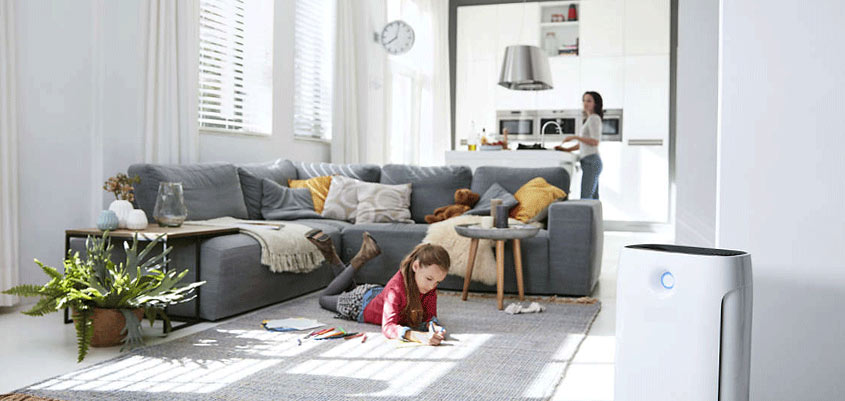
Air Purifiers: Functioning and Possibilities in Our Home
Discover which ventilation network best suits your project
Discover which ventilation network best suits your project Ventilation projects increasingly combine sustainability, comfort, health, and energy efficiency considerations. There is a clear objective to optimize resources. The aim is to advance along the lines of the Sustainable Development Goals (SDG 2030) and the philosophy passivhaus. Ventilation companies present projects compatible with energy efficiency and reduction of electricity consumption. This is contributed to by the overall context of crisis, with the resulting uncertainty arising from the invasion of Ukraine. Thus, for example, the government's energy security plan of Spain is a response to that reality.