Know the most used materials in sustainable constructions

superadmin
February 5, 2020
The different materials that will be used for the construction of a sustainable building must be committed to reducing pollution. We must evaluate the environmental impact of the products used, try to work with materials with the lowest level of industrial processing possible, or directly recycled materials such as plant fibers, animal fibers, or wood.
Moreover, many materials not only have a lower environmental impact but also have better performance. In the case of wood, its insulating capacity far exceeds that of concrete. It helps to dampen noise while maintaining a stable temperature inside the building or home. Additionally, with proper treatment, it can regulate the moisture of the environment.
In search of the perfect material
Finding sustainable construction materials is so important that there are branches of engineering, such as Materials Engineering, that focus on finding new ways to manufacture materials while producing the minimum possible environmental impact.
An example of these practices is being developed by researchers at the Massachusetts Institute of Technology (MIT), who are researching different formulas to make the manufacturing of construction materials as sustainable as possible. Their latest research is based on finding new ways to manufacture cement without producing greenhouse gas emissions, which currently represents 8 percent of the total worldwide.
Other sustainable materials
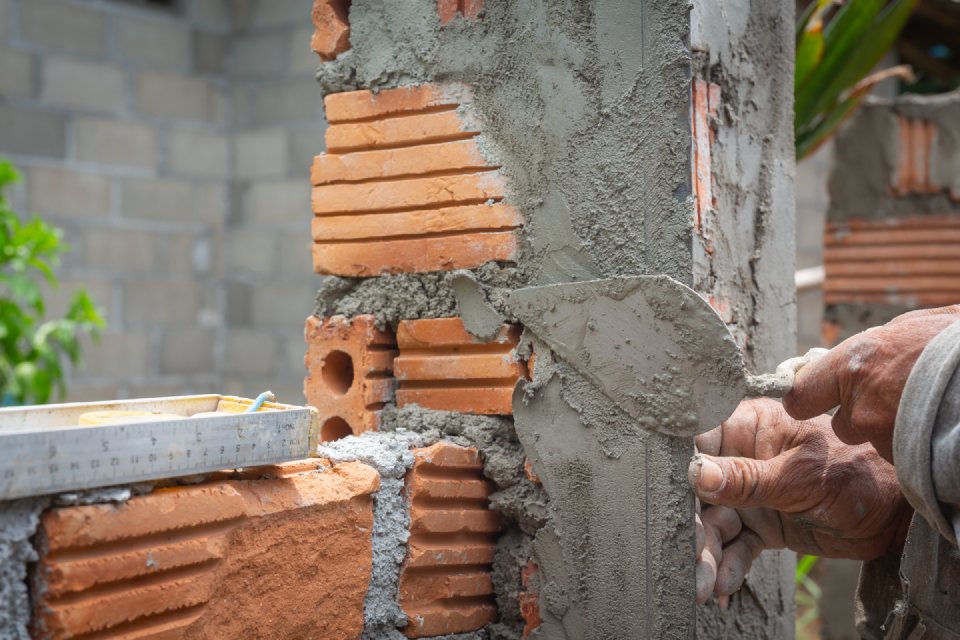
We highlight the evolution of traditional brick, made of red clay, giving way to ecological bricks that are non-polluting and cheaper.
In the construction market, the most recent innovation in ecological bricks is known as Blac Brick, as it is characterized by its black color, primarily derived from ashes resulting from boilers in the paper industry at 70%, with 20% clay and 10% lime extract and sodium hydroxide.
The advantage of "Blac Bricks" is that they harden at room temperature, meaning without firing. This avoids the firing process at 1,000 degrees Celsius that traditional bricks required. This saving means a reduction in the consumption of energy resources and a lower emissions of polluting gases into the environment.
Regarding thermal insulators, those that are ecological are biodegradable and avoid melting glass in an industrial process; and being thicker than traditional ones, they also provide acoustic insulation and absorb moisture better.
For walls, the recommended material is ecological cork thermal insulation placed in panels or sheets, also used in basements for its great moisture absorption capacity. Wood insulation uses waste from the wood processing for its manufacturing, or the losses from wood crushing. There are different types of wood insulating panels, and when combined with other materials, they usually improve their efficiency, although they are less ecological.
The cellulose insulation is made from paper waste and is currently one of the most used on the market, being completely recycled. Also available in panel form, cellulose has had to be treated to protect it from fire and mold; even so, its production cost is very low.
Likewise, wool insulation, sourced from sheep, is known for its thermal capacity when wet and its ability to expel moisture when the environment shifts from humid to dry.
For openings such as doors and windows, the common strategy is to use triple glazing with two air chambers. One of the chambers is filled with Argon (gas), which results in great thermal insulation. For carpentry, the material par excellence in recent years has been PVC (Polyvinyl Chloride), which is an economical material, easy to maintain, and with great energy efficiency.


Siber Ventilation
Related posts

How to build with sustainability and energy efficiency criteria
Sustainable houses, what requirements must they meet?