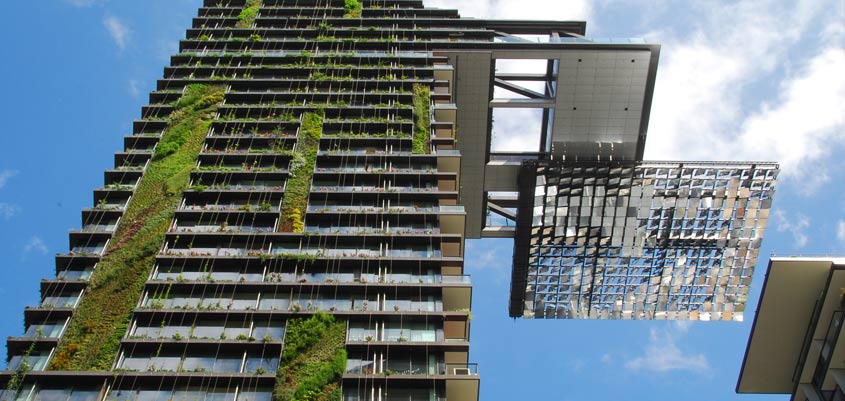
Sustainable architecture in Spain: some recent examples

superadmin
January 24, 2017
For more than a decade now, Spain has joined the group of countries where projects of sustainable architecture. One of the latest examples is the Plaza Ecópolis located in Rivas Vaciamadrid. The project designed by the Ecosistema Urbano architectural studio, consists of a kindergarten and an urban space formed by a square and a children's play center. The complex is built with a twofold objective: on one hand, to recover a very deteriorated urban space that became isolated within an industrial environment, and on the other, to achieve a significant reduction in energy consumption. For this reason, half of the building is buried, which favors the thermal stability of the interior both in winter and in summer.
It also features a south-facing glazed façade to maximize solar gain. The entire kindergarten is supported by a lightweight steel structure covered with a bioclimatic textile layer. This exterior coating is equipped with sensors that detect the position of the sun and allow for a small rotation in search of the optimal orientation. The sewage system leads to a nearby lagoon where waste is naturally purified by aquatic microphytes.
Other examples of sustainable architecture:
Another noteworthy example of sustainable architecture in our country is the bioclimatic home designed on the island of Tenerife by the Ruiz Larrea y Asociados studio. The search for optimal orientation, the use of materials extracted from the environment, and the zero energy cost during its operation were the parameters that guided this project. The materials used are: volcanic tuff stone, recycled riga wood, glass, bush-hammered concrete, and basalt stones in gardens, insulation, waterproofing, etc. The house has neither heating nor air conditioning, due to the benign climatic conditions of the archipelago. Its bioclimatic emphasis lies in the control of air renewal and the hygrothermal control of the same, as well as the landscape integration within the environment and the utilization of wind energies from the park located next to the house.
Within its construction system, stabilized walls of double leaf of native stone from the island of Tenerife stand out, which are supported directly on the ground allowing the interior air chamber to function as a thermal distributor of fresh air from the ground to the inside through the suction at the top created by the Venturi effect that occurs when overheating by radiation this latter. The roof of concrete slab with vegetative layer and native ground cover plants, is kept moist with a drip system, promoting evaporation of the same and thus guaranteeing the constant temperature of the mass of concrete avoiding the radiant response effect to the interior of masses with high inertia exposed to excessive sunlight. Finally, the house has a circuit for the installation of ACS panels, battery equipment, and alternators for photovoltaic panels incorporated into the foldable canopies of the porch oriented to the South.
 /div>
/div>

Siber Ventilation
Related posts