Recommended levels of CO2, temperature and humidity indoors

superadmin
November 17, 2017
In the field of ventilation, the most important mission is to create closed environments and rooms that are healthier and more comfortable for their inhabitants. Factors such as the recommended levels of humidity or temperature directly influence the well-being of all of us and it is important to know what levels our home should display in relation to this. Likewise, it is very important to be concerned about the volume of carbon dioxide (CO2) wherever we are.
Every ventilation system, passive or active, must be able to maintain recommended levels within a range, taking into account the characteristics of the location where the building is located. And also the atmospheric conditions at the moment.
With regard to new buildings or rehabilitation, these recommended levels of temperature, CO2, and humidity should be sought not only through the use of mechanical ventilation systems but by applying the concepts of energy efficiency in homes.
Recommended temperature levels

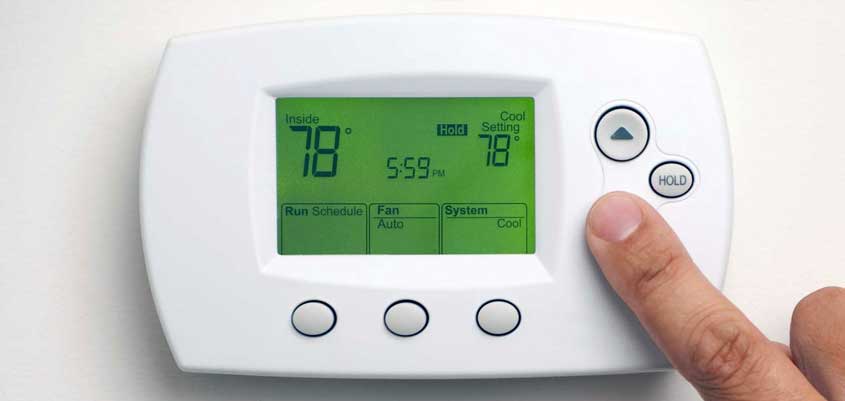
The indoor temperature should be measured in relation to the humidity of the place. The thermal sensation is a very important factor to consider, and the same levels of heat or cold will be different in very humid or too dry areas.
The Regulation of Thermal Installations in Buildings (RITE) recommends, for example, that in office environments, large workplaces, the air conditioning should be set to 26 °C, with a relative humidity between 30% and 70%. However, it provides more detailed recommended temperature levels for summer and winter:
- In summer, between 23 and 25 degrees with humidity percentages between 45 and 60.
- In winter, between 21 and 23 degrees with humidity percentages between 40 and 50.
CO2 levels indoors
Carbon dioxide is not a pollutant in itself, but its concentration in indoor spaces is one of the most used indicators to measure air quality. Monitoring its presence in buildings is crucial to ensure the health and comfort of their occupants. According to the Technical Building Code (CTE) in Spain, the recommended levels of carbon dioxide (CO2) indoors should not exceed 1,000 ppm to maintain acceptable air quality. However, at higher values, up to 1,600 ppm, it is still considered a tolerable level, although at this last level it is already advisable to increase ventilation. Because beyond this limit, air quality begins to deteriorate significantly, affecting well-being and potentially causing symptoms such as fatigue or drowsiness. To protect against elevated levels of carbon dioxide at home, it is advisable to take certain precautions, such as the ones indicated below:- Ensure that heating systems and water heaters are in perfect working condition.
- Optimize the efficiency of heating systems to avoid excessive consumption.
- Reduce the use of gas appliances whenever possible.
Humidity levels in buildings

It is very important to maintain correct recommended humidity levels in our homes and closed spaces. In Spain, many homes in coastal areas suffer from high humidity problems, which can lead to health and comfort issues.
It is important to maintain humidity levels at home and work between 30% and 50%. The ideal point would be at 40, as we have already explained in this article about humidity at home.
To know the situation of the room, it is possible to know it with a hygrometer, which measures humidity in closed spaces. It is similar to a thermometer and has a similar price.
Controlling the recommended levels of humidity, temperature, and CO2 is basic for a good value of safety and comfort at home.


Siber Ventilation
Related posts

Constant flow ventilation systems, how do they work?