Adiabatic cooling, what it is and how to use it
superadmin
November 4, 2017
Technically explained, adiabatic cooling is achieved by evaporating the water that resides in the air. Something that, obviously, makes the climate less dry and will increase the humidity. And that is why it is also called evaporative cooling. This is because the water sprayed evaporates into the environment and makes it more humid.
It is primarily a thermodynamic technical process and is usually carried out in industrial environments. Even so, adiabatic cooling in the air conditioning of buildings is also a reality, as it helps improve thermal sensation and refresh rooms.
Adiabatic processes are, technically, those that prevent heat transfer with the environment. And although in industry they tend to include techniques related to, for example, fuels or different pressures in a gas, in building construction they are much simpler to understand. In air conditioning, it involves supplying vapor to the room.
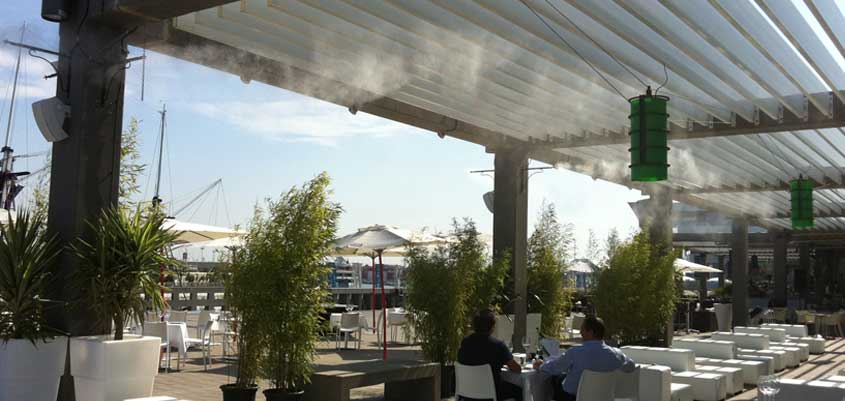
The most common example of adiabatic cooling in aspects related to air conditioning are the steam sprinklers found in many buildings and offices.
Adiabatic cooling in air conditioning

If we add water to the air and then it is evaporated, a physical reaction occurs that we can refer to as adiabatic cooling. And this is usually achieved by spraying droplets of vapor -or also water- through the usual sprinklers. Similar to those used for irrigation, but usually installed in ceilings and that only spray vapor or micro-droplets of water.
In addition to sprinklers, we have other techniques to achieve this thermodynamic process. One of them is the use of wet panels that the wind or air current passes through. In any case, for it to be an adiabatic process of cooling, the main premise must be fulfilled: increase humidity and decrease dry ambiance.
Adiabatic cooling processes in air conditioning can be applied to the supply air, which is called direct adiabatic cooling, or they can be applied to double-flow systems with heat recovery, cooling the extraction air before it passes through the heat exchanger, in which case it is called indirect adiabatic cooling. Here's how it works:
- Through the air conditioning system, dry air is shot. In the sprinkler, tiny droplets of water or vapor are released, in case this is the medium used. If it is a panel, the air current triggered by ventilation passes through the wet surface.
- The air increases its humidity level, and along with the circulation of dry air outside, it causes the direct evaporation of micro-droplets of water.
- The air cools down and increases humidity.
Pros and cons of adiabatic cooling
This thermodynamic process in air conditioning is economical and very functional. However, it is not the perfect solution for every environment. It can be a good alternative in certain environments and climates.- It is very cheap. The installation does not require great artifices and an adiabatic cooling system in air conditioning uses very little energy. Less than almost any common household appliance.
- The temperature can drop between 2º and 10º Celsius, depending on where it is installed.
- It tends to work well in outdoor environments, so it is suitable for terraces in summer.
- It is ideal for very dry climates in summer. However, its use in very humid temperatures -like those of the Spanish coasts- does not have many benefits, as the climate is humid before the thermodynamic process occurs.
- The temperature decrease with this method has some limits. If used in dry hot days, it can help a lot. But if it is one of those extremely hot midday days, it may not be noticeable and it may be necessary to use air conditioning.
- It is important to ensure that the sprayed water is free of bacteria.

Siber Ventilation
Related posts

Why is mechanical ventilation necessary in homes?

Constant flow ventilation systems, how do they work?